Why does my insurer want me to do a health check on my phone in just 60 seconds?
The fast phone health check insurance reason explained for medical officers: how 60-second screens fit digital underwriting compliance and insurtech regulation.
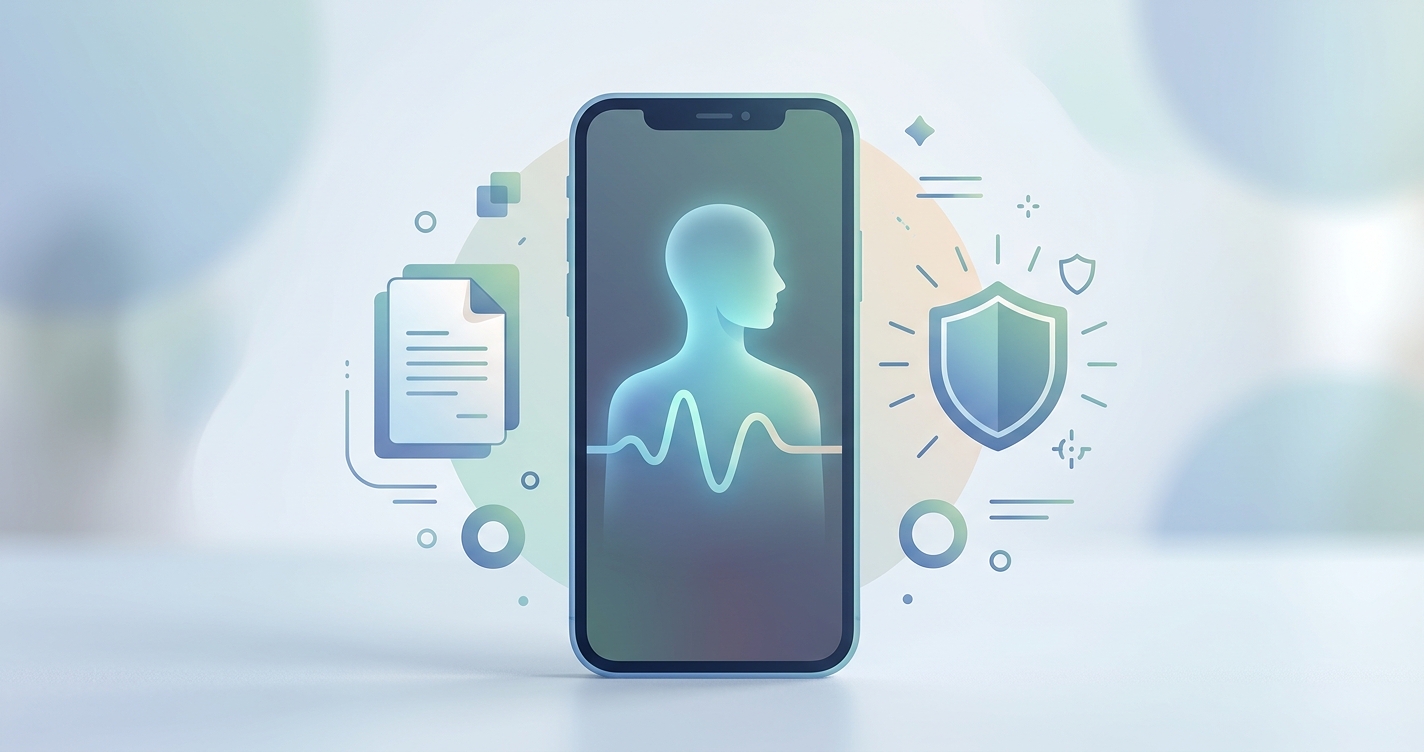
When an applicant is asked to point a phone camera at their face for 60 seconds and the carrier returns a decision within minutes, the obvious consumer question is simple: why? The fast phone health check insurance reason is not, as many applicants assume, a gimmick to speed up sales. It is the visible front end of a deeper shift in how carriers collect, govern, and defend underwriting evidence. For chief medical officers, reinsurance medical directors, and compliance leaders, that 60-second scan represents a controlled data-capture event that must satisfy actuarial standards, model risk expectations, and an expanding set of regulatory obligations at the same time. Understanding the reason behind the request means understanding the compliance machinery sitting behind the camera.
In its 2024 biennial Accelerated Underwriting Survey, Munich Re Life US found that wearable and passive activity data was being evaluated by only 7 percent of carriers, down from 16 percent in 2022, while structured digital health sources such as electronic health records, medical claims, and laboratory data continued to dominate accelerated programs.
That single statistic explains a great deal. Carriers are not chasing every novel data stream. They are concentrating on screens that produce structured, repeatable, and auditable signals. A short phone-based health check fits that preference because it generates a defined data record at a known moment, under conditions the carrier can describe to a regulator.
The fast phone health check insurance reason behind the 60-second design
The core fast phone health check insurance reason is throughput without losing evidentiary integrity. Traditional fluidless underwriting removed the paramedical exam but left carriers with thinner mortality signals. A contactless vitals scan, typically using photoplethysmography to estimate heart rate, heart rate variability, and related cardiovascular proxies, restores some of that signal while keeping the process remote. The 60-second window is a deliberate engineering and compliance choice. It is long enough to capture a stable physiological reading and short enough to keep applicant drop-off low, which matters because abandonment itself can introduce adverse selection.
From a medical officer's seat, the brevity is also a governance feature. A bounded capture event is easier to document, timestamp, and reproduce than a sprawling data pull from multiple third parties. Every element of the interaction, including consent, lighting conditions, device type, and model version, can be logged. That log becomes the spine of digital underwriting compliance when an examiner later asks how a given decision was reached.
Several pressures converge on the design:
- Speed expectations from distribution partners who measure placement rates in days, not weeks.
- Mortality protection requirements from reinsurers who price treaties around evidence quality.
- Regulatory demands for transparency, fairness testing, and adverse action explainability.
- Consumer privacy law obligations governing biometric and health data capture.
- Internal model risk controls that require version tracking and ongoing validation.
The 60-second check is the point where all five pressures must be reconciled in a single applicant experience.
| Underwriting approach | Typical decision time | Evidence depth | Primary compliance burden |
|---|---|---|---|
| Full paramedical exam plus fluids | 2 to 6 weeks | High, lab-grade | Vendor chain of custody, lab accreditation |
| Fluidless with third-party data only | Hours to days | Moderate, inferred | Third-party data governance, FCRA-style adverse action |
| 60-second phone vitals check | Minutes | Moderate, physiological | Biometric consent, model validation, fairness testing |
| Hybrid scan plus structured health data | Minutes to hours | High, blended | Full insurtech regulatory framework coverage |
The table shows why the phone check rarely operates alone. Most carriers blend it with structured health data sources, which is consistent with what Munich Re and Gen Re both reported in their 2024 accelerated underwriting surveys: EHRs, prescription histories, and aggregated lab results remain the backbone, with newer signals layered on top rather than replacing the core.
Industry applications and the compliance logic behind them
Accelerated underwriting throughput
The most common application is accelerating an existing fluidless program. Here the phone check serves as a triage signal. A clean reading can confirm eligibility for an accelerated path, while an anomalous one routes the applicant to traditional evidence. For a medical director, the value is not the scan in isolation but how cleanly it slots into a decision tree that can be explained and defended. The NAIC Accelerated Underwriting (A) Working Group, whose regulatory guidance was adopted on August 14, 2024, expects carriers to show that such programs are fair, transparent, safe, secure, and compliant with existing law. A documented triage logic supports each of those criteria.
Reinsurance treaty alignment
Reinsurance medical directors increasingly want to see the evidence basis for accelerated decisions written into treaty terms. A standardized, logged 60-second capture gives both cedent and reinsurer a common reference point for what was measured and how. This reduces disputes over whether an accelerated decision met the agreed mortality protection standard.
Adverse action and consumer-facing transparency
Because a phone check can influence a rate or eligibility outcome, it falls within the explainability expectations of the insurtech regulatory framework now forming around AI-supported decisions. Carriers must be able to tell an applicant, in plain language, what role the scan played. This is where many programs succeed or fail in examination.
Current research and evidence
The evidence base in 2024 points toward consolidation rather than experimentation. Munich Re Life US, in its fourth biennial Accelerated Underwriting Survey conducted in fall 2024, described the accelerated underwriting environment as stabilizing, with carriers expanding eligibility limits while being selective about which data tools they trust. Gen Re's 2024 US Individual Life Accelerated Underwriting Survey similarly focused on throughput rates, evidence sources, and emerging mortality experience, signaling that carriers now have enough history to study outcomes rather than simply pilot tools.
On the data-quality side, LexisNexis Risk Solutions reported in its 2024 Life Insurance Mortality Risk Management Study that combining medical and non-medical data improved applicant evaluation, reinforcing the blended-evidence model rather than any single-source approach. The clear takeaway for medical officers is that a phone check earns its place only when its physiological signal complements, and can be reconciled with, the structured health data already in the file.
The regulatory record is moving just as deliberately. The NAIC adopted its Model Bulletin on the Use of Artificial Intelligence Systems by Insurers on December 4, 2023, requiring that AI-supported decisions across the insurance lifecycle comply with all applicable laws and be backed by documented governance. By early 2026, 25 jurisdictions had adopted their own versions of that bulletin, and the Third-Party Data and Models (H) Task Force, formed in 2024, began building oversight specifically for third-party data and predictive models. A 60-second scan that depends on a vendor model now sits squarely inside that oversight scope.
The future of fast phone health checks
The direction of travel favors carriers who treat the scan as a governed data asset rather than a conversion tactic. Three developments are likely to define the next phase:
- Model documentation will become non-negotiable. Expect version control, drift monitoring, and bias testing to be standard examination requests, mirroring model risk management expectations already familiar from banking regulators.
- Consent architecture will tighten. As more states extend biometric and health privacy rules, the consent captured in those 60 seconds will need to be specific, revocable, and logged with the same rigor as the physiological reading itself.
- Evidence interoperability will grow. Carriers and reinsurers will push for scan outputs that map cleanly into existing underwriting and treaty frameworks, reducing reliance on proprietary scoring that cannot be independently reviewed.
For medical and compliance leadership, the strategic question is not whether to use a fast phone health check but whether the surrounding controls can withstand a market conduct exam. The technology is maturing faster than many internal governance programs, and that gap is where regulatory risk concentrates.
Frequently asked questions
Why do insurers prefer a 60-second scan over a longer assessment? A bounded capture window produces a stable physiological reading while keeping applicant drop-off low. It also creates a discrete, timestamped data event that is far easier to document, reproduce, and defend during regulatory examination than an open-ended data collection process.
Does the phone check replace medical records and lab data? Rarely. Industry surveys in 2024 show structured sources such as electronic health records, prescription histories, and laboratory results still anchor most accelerated programs. The scan typically supplements those signals and supports triage rather than replacing the underlying evidence.
What regulations govern a phone-based health check? The capture sits inside the NAIC AI Model Bulletin framework, state biometric and health privacy laws, and the 2024 accelerated underwriting regulatory guidance. Carriers must demonstrate fairness, transparency, model validation, documented consent, and clear adverse action explanations.
What should a chief medical officer verify before deploying one? Confirm model version control and drift monitoring, bias and fairness testing, a logged consent flow, alignment with reinsurance treaty evidence standards, and an audit trail detailed enough to satisfy a market conduct exam.
Circadify is building tooling for exactly this intersection of contactless health capture and underwriting governance, helping carriers document the reasoning behind every fast phone health check. For compliance guides and regulatory insights tailored to medical and compliance leadership, visit circadify.com/industries/payers-insurance.