
In-House vs Vendor Underwriting Technology Standards Compared
Compare in-house and vendor approaches to underwriting technology standards, weighing validation burden, regulatory risk, and vendor compliance assessment for carriers.
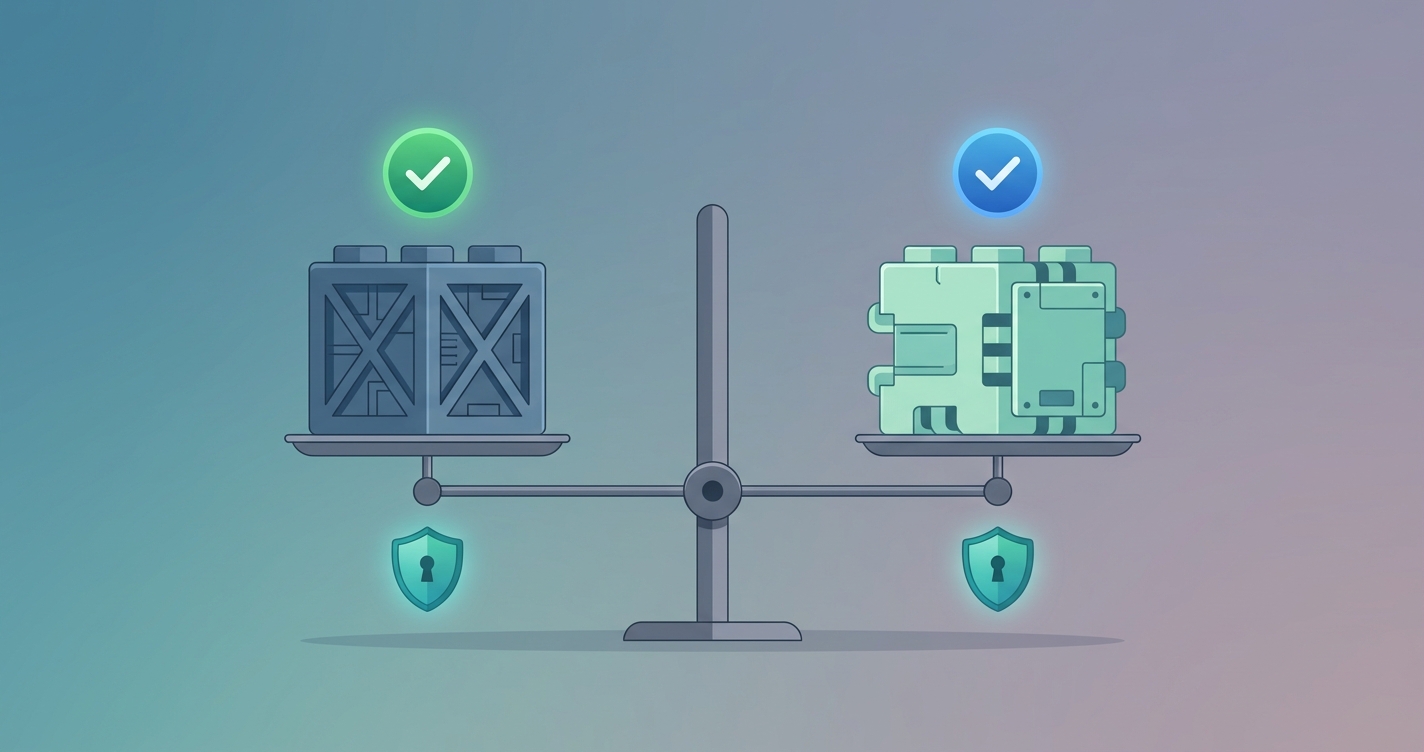
The build-or-buy question that compliance leaders face today is no longer a procurement footnote. It is a regulatory decision with measurable downstream exposure. When a carrier chooses how to source its automated decisioning stack, it is also choosing how it will demonstrate control to examiners, how it will validate model behavior, and how it will document accountability when a regulator asks who is responsible for an adverse decision. Meeting modern underwriting technology standards now depends as much on governance architecture as on engineering quality, and the in-house versus vendor split shapes both the validation burden and the residual regulatory risk a chief medical officer or compliance team carries.
The NAIC Model Bulletin on the Use of Artificial Intelligence Systems by Insurers, adopted in December 2023, has been taken up by more than 20 states and makes one point unambiguous: an insurer remains ultimately responsible for compliance even when the underlying AI system or data is supplied by a third party.
Why underwriting technology standards now drive the build-or-buy decision
Underwriting technology standards have shifted from internal engineering preferences to externally enforced expectations. The NAIC Model Bulletin requires each insurer to maintain a written AI Systems (AIS) Program covering governance, risk management, and internal controls, with documented validation, testing, and retesting of model outputs. Crucially, that obligation does not transfer when a carrier licenses a platform. As the bulletin frames it, the insurer must apply written standards and policies to the acquisition, use, and reliance on third-party systems, conduct due diligence, and secure contractual audit rights.
This reframes the build-versus-buy calculation. Building in-house gives a carrier direct ownership of source code, model documentation, and the validation evidence trail. Buying shifts development cost and feature velocity to a vendor but introduces a vendor compliance assessment obligation that examiners will probe directly. Neither path removes accountability. The question is where the validation labor sits and how defensible the resulting governance record is.
Several forces have raised the stakes. Earnix research indicates roughly 70 percent of insurers expect to spend more time on regulatory compliance, and the NAIC's Third-Party Data and Models (H) Task Force, formed in 2024, signals that regulators are building dedicated machinery to scrutinize externally sourced models. A carrier that cannot explain a vendor's data lineage or bias-testing methodology is exposed regardless of how the contract assigns liability.
In-house vs vendor: a side-by-side comparison
The table below compares the two sourcing models against the criteria that matter most to a compliance function evaluating digital underwriting governance standards.
| Evaluation criterion | In-house build | Vendor platform |
|---|---|---|
| Initial cost and time to deploy | High upfront capital, multi-year build cycles | Lower upfront cost, faster deployment |
| Validation burden ownership | Carrier holds full model validation and documentation | Shared; carrier still validates vendor outputs |
| Total cost of ownership | Higher; Gartner-cited estimates suggest 50 to 70 percent of custom system costs are commonly overlooked | Spread across vendor client base; predictable subscription |
| Regulatory update responsibility | Internal teams track and implement rule changes | Vendor manages updates; carrier verifies coverage |
| Audit and examination evidence | Direct control over full evidence trail | Depends on contractual audit rights and vendor transparency |
| Customization and control | Maximum; tailored to carrier risk appetite | Configurable within platform limits |
| Residual regulatory risk | Concentrated internally but fully visible | Distributed but partly opaque without diligence |
| Talent dependency | Requires retained data science and engineering staff | Reduced internal headcount need |
The pattern that emerges is not a clean winner. In-house development maximizes control and visibility at the cost of capital, time, and sustained specialist staffing. Vendor platforms compress cost and time but convert part of the validation problem into a vendor compliance assessment problem that many compliance teams are not yet structured to run.
Key trade-offs worth isolating:
- In-house builds give examiners a single accountable owner but expose the carrier to the full weight of insurance technology validation, including ongoing retesting as models drift.
- Vendor platforms reduce engineering risk yet require the carrier to obtain and review the vendor's validation artifacts, fairness testing, and data provenance.
- Hybrid arrangements, where a carrier licenses a core platform and configures decisioning logic internally, split the evidence trail and demand clarity about which party documents what.
Industry applications across the underwriting stack
Medical underwriting and contactless vitals
For chief medical officers integrating contactless vitals or accelerated underwriting, the sourcing decision determines who validates clinical signal quality. A vendor that supplies a physiological measurement model must be able to produce evidence of how it was validated across demographic groups. The carrier's medical director still owns the decision to rely on that signal, which means a vendor compliance assessment has to interrogate measurement accuracy claims rather than accept them at face value.
Reinsurance and portfolio oversight
Reinsurance medical directors evaluating ceding carriers increasingly ask how the cedant's underwriting technology was sourced and validated. A weak vendor governance record at the primary carrier becomes a diligence concern up the chain, because model error and bias risk propagate into the reinsured portfolio.
Compliance and market conduct readiness
Compliance teams preparing for market conduct examinations need an evidence trail that matches the AIS Program structure regulators now expect. Whether the technology is built or bought, the documentation has to show governance accountability, validation methodology, and ongoing monitoring. The sourcing model changes who produces those documents, not whether they are required.
Current research and evidence
The regulatory record is converging on shared third-party expectations. The NAIC Model Bulletin, adopted in late 2023 and now in force across more than 20 states according to multiple legal analyses including Sullivan and Cromwell and Quarles, directs insurers to maintain written third-party standards, conduct due diligence, and secure audit rights and regulatory cooperation clauses in vendor contracts. Fenwick's analysis of the NAIC Third-Party Data and Models (H) Task Force, established in 2024, notes that regulators are specifically targeting the accountability gap created when carriers rely on externally built models.
On the economics, industry build-versus-buy analyses cite Gartner's observation that 50 to 70 percent of the total cost of custom-built core systems is routinely underestimated, driven by maintenance, security patching, and the continuous work of keeping pace with regulatory change. Earnix's compliance research adds quantitative context, with about 70 percent of insurers anticipating greater compliance workload, a trend that favors solutions where regulatory updates are maintained centrally rather than rebuilt internally with each rule change.
The evidence does not endorse one sourcing model. It establishes that both carry a non-transferable validation and governance obligation, and that the decisive variable is the quality of the evidence trail a carrier can produce on demand.
The future of underwriting technology standards
Three developments are likely to define the next phase. First, vendor diligence will become a formalized, examinable workflow rather than an ad hoc procurement step, with regulators expecting standardized documentation of how carriers assessed third-party models. Second, the line between build and buy will blur further as configurable platforms let carriers own decisioning logic while licensing core infrastructure, creating shared-responsibility models that demand precise documentation of who validates what. Third, fairness and bias testing will move from periodic exercises to continuous monitoring obligations, raising the validation cost of any model whether internally built or vendor supplied.
Carriers that treat underwriting technology standards as a static checklist will struggle. The durable advantage belongs to compliance functions that can demonstrate a living governance record, regardless of where the code originated.
Frequently asked questions
Does buying a vendor underwriting platform transfer regulatory liability away from the carrier? No. The NAIC Model Bulletin makes clear that the insurer remains ultimately responsible for compliance even when relying on third-party AI systems and data. A vendor contract can allocate certain obligations and audit rights, but examiners hold the carrier accountable for the decisions its technology produces.
What should a vendor compliance assessment cover? At minimum it should address the vendor's model validation methodology, data provenance and lineage, fairness and bias testing across demographic groups, documented governance accountability, audit rights, breach and regulatory cooperation clauses, and the vendor's ability to supply examination-ready evidence.
Is building in-house lower risk than buying? Not inherently. In-house builds concentrate full visibility and control with the carrier, but also place the entire validation, retesting, and regulatory update burden internally. The lower-risk path is the one with the stronger, more defensible evidence trail for your specific governance maturity.
How do underwriting technology standards apply to contactless vitals models? The same governance, validation, and documentation expectations apply. The medical decision-maker must be able to show that any physiological measurement signal was validated for accuracy and fairness before it influenced an underwriting outcome, whether the model was built internally or licensed.
Circadify is building tools that help carriers and their compliance teams structure exactly this kind of evidence trail, from vendor diligence through validation documentation aligned to digital underwriting governance standards. For compliance guides and regulatory insights to support your build-or-buy evaluation, visit Circadify's payers and insurance resources.