
Audit Trail Requirements for Digital Underwriting in 2026
What regulators expect from underwriting audit trail requirements in 2026, including logging records, retention windows, and reconstruction standards for digital systems.
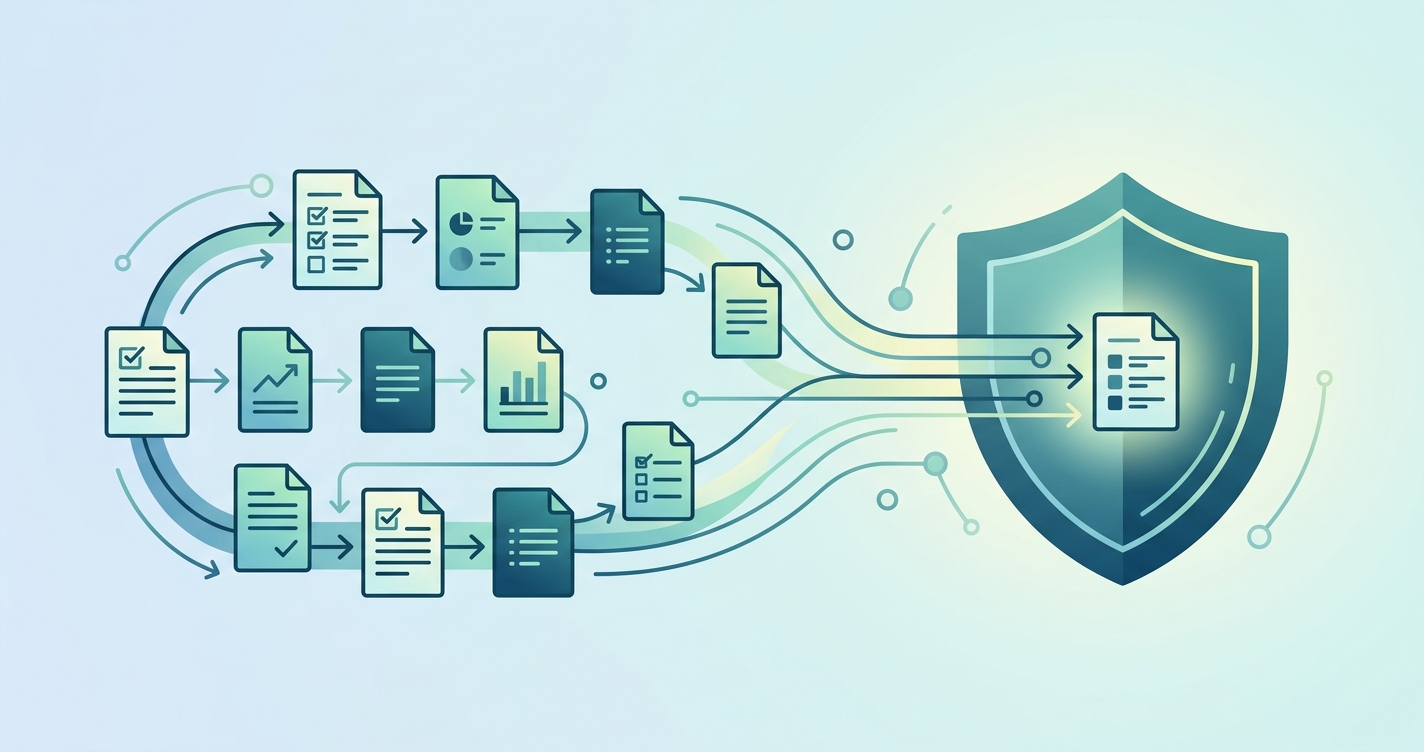
When a state examiner asks a carrier to reconstruct exactly how a digital underwriting system reached a decision on a specific applicant two years ago, the answer rarely lives in a policy binder. It lives, or fails to live, in the system logs. Meeting underwriting audit trail requirements has become the practical test of whether a digital underwriting program can survive regulatory scrutiny, and in 2026 that test is sharper than it has ever been. Compliance officers, chief medical officers, and reinsurance medical directors now treat the audit trail not as an IT afterthought but as the primary evidence that a decision was lawful, explainable, and reproducible.
24 states had adopted the NAIC Model Bulletin on the Use of Artificial Intelligence Systems by Insurers, requiring carriers to maintain documentation sufficient for regulators to reconstruct AI-driven underwriting decisions on request., National Association of Insurance Commissioners
What underwriting audit trail requirements actually mean in 2026
An audit trail is the chronological, tamper-evident record of every event that contributed to an underwriting outcome. The NAIC Model Bulletin, adopted in December 2023 and now reflected in a majority of state guidance, expects insurers to keep documentation detailed enough that a regulator can trace a decision from data intake through model scoring to the final disposition. Application-level logging alone does not satisfy this. A queryable, reconstructable record is the standard.
The shift matters because digital underwriting compresses what used to be a weeks-long, paper-heavy process into seconds of automated scoring. The speed removes the natural paper trail that legacy underwriting generated through nurse visits, signed attestations, and underwriter notes. Regulators have responded by asking carriers to manufacture an equivalent evidence trail inside the software itself.
Under the NAIC framework, a carrier maintaining an AI Systems Program is expected to document model inventories, data lineage, model objectives, validation reports, and governance structures. Colorado pushes further. Its Regulation 10-1-1, in force for life insurers since November 2023, requires comprehensive documentation of how external consumer data, algorithms, and predictive models are used, including methodology, assumptions, results, and remedial actions. Auto and health insurers must have governance frameworks available to the Colorado Division of Insurance by July 1, 2026, with annual compliance reporting after that.
Comparison: what regulators expect across recordkeeping dimensions
The following table summarizes how audit logging insurance obligations differ by regulatory source and what a compliant program records for each.
| Recordkeeping dimension | NAIC Model Bulletin (2023) | Colorado Reg 10-1-1 / SB21-169 | Traditional underwriting standard |
|---|---|---|---|
| Decision reconstruction | Reconstruct AI-driven decisions on request | Document methodology, assumptions, results | Underwriter file notes |
| Data lineage logging | Required for AIS Program inventory | Required for ECDIS inputs | Source documents in file |
| Model version tracking | Expected for validation reports | Required with ongoing testing records | Not applicable |
| Retention window | Aligned with state statutes of limitations | Tied to annual attestation cycles | State recordkeeping statutes |
| Tamper-evidence | Implied through integrity controls | Implied through governance framework | Physical file integrity |
| Third-party vendor records | Contractual audit rights required | Vendor documentation in scope | Limited |
The pattern across these sources is consistent. Regulators want carriers to prove three things: what data entered the decision, what logic processed it, and that neither has been quietly altered after the fact.
Core components of a defensible audit trail
A digital underwriting compliance program that holds up under examination typically captures the following at the event level:
- Input data lineage, recording the source, timestamp, and version of every data element used, including external consumer data and contactless health signals.
- Model identity and version, so a reviewer can pinpoint which model build scored a given application.
- Decision outputs and reason codes, linking each disposition to the factors that drove it.
- Human intervention events, noting when an underwriter overrode, escalated, or reviewed an automated outcome.
- Access and modification logs, showing who viewed or changed records and when.
- Consent and disclosure records, tying applicant authorizations to the data actually used.
- Retention and disposition events, documenting when records were archived or deleted under policy.
The integrity layer matters as much as the content. Logs that can be edited without trace carry little evidentiary weight. Carriers increasingly apply write-once storage, cryptographic hashing, and segregated access controls so that the audit trail itself can withstand challenge.
Industry applications across the underwriting stack
Life and health carriers using accelerated underwriting
Accelerated programs that bypass fluids and exams rely heavily on data feeds and predictive models, which means the audit trail must capture every substituted data source. When a regulator questions whether a model produced a proxy for a protected class, the carrier needs records showing input lineage and bias testing results, not just the final score.
Reinsurance and medical directors
Reinsurance medical directors evaluating ceded blocks now ask for evidence that the ceding carrier's underwriting technology standards include reconstructable logs. A block underwritten through an opaque system carries hidden regulatory and litigation exposure that surfaces during treaty review.
Vendor-supplied underwriting platforms
The NAIC bulletin makes carriers accountable for third-party models. That accountability flows into logging. A carrier must either ingest vendor decision records into its own audit trail or secure contractual audit rights that guarantee access to vendor logs during an examination or investigation.
Current research and evidence
The regulatory record offers concrete signals about where recordkeeping expectations are heading. The NAIC Model Bulletin, adopted in December 2023, was endorsed by 24 states by March 2025, according to NAIC tracking, making its documentation expectations a de facto national baseline rather than a regional experiment. The bulletin's emphasis on a written AI Systems Program, vendor due diligence, and reconstructable documentation reflects a deliberate move from principles toward evidence.
Colorado provides the most prescriptive model. Analysis of SB21-169 and Regulation 10-1-1 by industry observers, including the actuarial firm Milliman, documents that life insurers have operated under binding governance and quantitative testing requirements since late 2023, with auto and health insurers facing a July 1, 2026 framework deadline. The Colorado approach pairs documentation with ongoing quantitative testing for unfair discrimination, meaning the audit trail must preserve Individual decisions. The testing evidence that demonstrates the model behaved fairly across protected classes.
Practitioner guidance has converged on a shared specification. Commentary from compliance technology analysts emphasizes that retention should align with state statutes of limitations, that application logs alone are insufficient, and that integrity controls are necessary for logs to serve as evidence. The common thread is reconstruction: a record that cannot rebuild a past decision is not a compliant audit trail regardless of its volume.
The future of underwriting audit trails
Three developments are likely to shape regulatory recordkeeping over the next several years. First, harmonization pressure will grow as more states adopt the NAIC bulletin, nudging carriers toward a single audit architecture that satisfies the strictest state rather than maintaining parallel logging schemes. Second, expectations will extend deeper into the model lifecycle, with regulators asking What a model decided. How it was trained, validated, and monitored over time. Third, the audit trail will become continuous rather than episodic, shifting from records pulled for an examination to live governance dashboards that demonstrate ongoing control.
For compliance leaders, the strategic implication is that audit logging can no longer be retrofitted. The carriers that fare best in market conduct exams are those that designed reconstructable, tamper-evident logging into the underwriting system before the first applicant was scored. Treating the audit trail as foundational infrastructure, rather than as documentation assembled under deadline, is what separates a defensible program from an exposed one.
Frequently asked questions
What is the difference between an audit trail and standard application logging?
Standard application logging records system events for operational and debugging purposes. An audit trail is a structured, tamper-evident record designed to reconstruct a specific underwriting decision, capturing data lineage, model version, reason codes, and human interventions. Regulators have stated that application logs alone do not satisfy reconstruction expectations.
How long should carriers retain digital underwriting audit records?
Most guidance ties retention to applicable state statutes of limitations and state recordkeeping statutes rather than a single fixed period. Because litigation and examination windows can extend years past a decision, carriers commonly retain records for the longest applicable limitation period across the jurisdictions in which they write business.
Do audit trail requirements apply to vendor-supplied underwriting models?
Yes. The NAIC Model Bulletin holds carriers accountable for third-party models, including due diligence and contractual audit rights. Carriers must be able to produce decision records from vendor systems during an examination, either by ingesting those records into their own trail or by securing contractual access.
What makes an audit trail defensible during a market conduct exam?
A defensible trail can reconstruct individual decisions from input to disposition, preserves model version and reason codes, includes tamper-evidence such as write-once storage or cryptographic hashing, and retains supporting validation and bias-testing evidence for the required period.
Circadify is building regulatory technology that helps carriers design reconstructable, examination-ready audit trails into digital underwriting from the start rather than reverse-engineering them under deadline. Compliance teams evaluating their current recordkeeping posture can review our compliance guides and request a governance assessment at circadify.com/industries/payers-insurance.